FREE DELIVERY TODAY - Place your 1st order.

Showing all 10 resultsSorted by latest

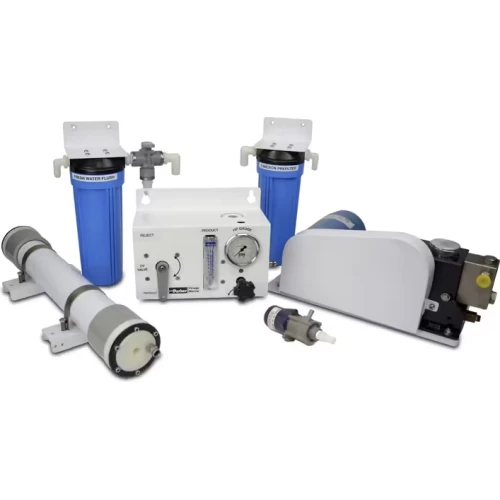
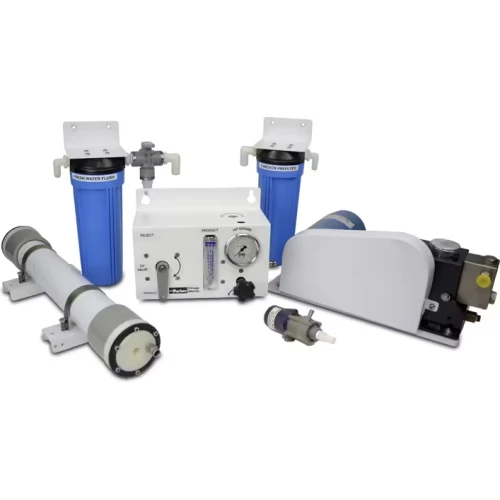


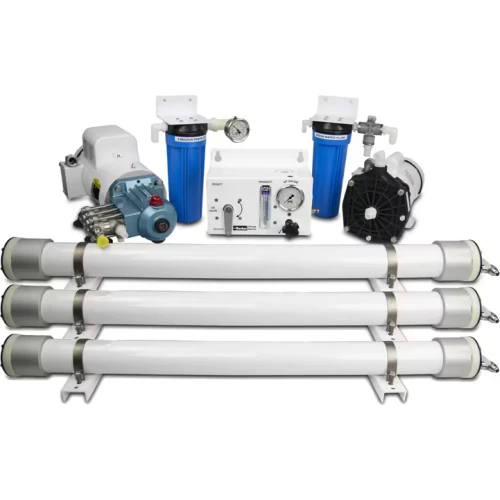
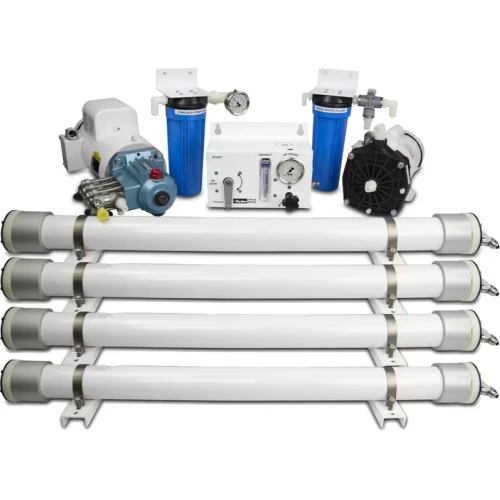


Marine Watermakers – Portable & Installed Reverse Osmosis Systems
Shop our full selection of marine watermakers, from compact emergency desalinators for liferafts and survival kits to fully automated, permanently installed reverse osmosis systems built for full-time cruisers and offshore passagemakers. Whatever your water needs on the water, our lineup covers trusted brands and system types to keep your tanks full without relying on shore access.
Shop Watermakers by Brand
We carry watermakers from five of the most established names in marine desalination: Katadyn, known for both automated RO systems and rugged manual desalinators trusted by militaries and individual survivalists worldwide; Spectra, recognized for energy-efficient systems built around energy recovery technology that reduces power draw for cruising sailboats; Sea Recovery, a long-established name in marine RO systems for yachts and commercial vessels; FCI WaterMakers, known for high-output, automated systems with marine-grade controls popular on long-range yachts; and Schenker, recognized for compact, easy-to-install systems well suited to cruising boats with limited space. Not sure which brand or system fits your boat? See our guidance below or reach out to our team.
How a Marine Watermaker Works
Marine watermakers use reverse osmosis (RO) to convert seawater into drinkable freshwater through five basic stages: intake draws seawater in from below the waterline, pre-filtration removes sediment and debris, a high-pressure pump forces the water through a semi-permeable RO membrane, the membrane separates salt and contaminants from fresh water, and a final testing/post-treatment stage ensures water quality before it reaches your tank. Only a small fraction of the seawater that enters the system becomes fresh water — the rest, concentrated with rejected salt, is discharged overboard as brine.
Portable & Manual vs. Installed Systems
Portable and manual desalinators are compact, hand-operated or small-footprint units designed for emergency use — liferafts, survival kits, or backup water production when a main system is unavailable. They require no external power and are built for reliability in critical situations rather than daily-use volume. Permanently installed systems are designed for regular, higher-volume freshwater production aboard cruising boats and yachts, running on 12/24V DC or AC power depending on output needs, and are available in modular configurations for tight spaces or framed/enclosed units that simplify mounting and service.
Sizing Your Watermaker
Watermaker output is rated in Gallons Per Day (GPD), typically assuming continuous 24/7 operation, so real-world daily output depends on how many hours per day you run the system. Sizing generally starts with daily water use per person (drinking, cooking, washing, showering) multiplied by the number of people aboard, then adjusted for your cruising profile — coastal cruisers with regular dock access can often get by with smaller, lower-output systems, while offshore cruisers and full-time liveaboards aiming for self-sufficiency typically need higher-capacity units.
Keeping Your System Running
RO membranes are the heart of any watermaker system and need protection to last: strainers and pre-filters keep sediment and debris from reaching the membrane, flushing after each use prevents salt buildup and biological fouling, and an inline TDS (Total Dissolved Solids) meter lets you monitor water quality in real time. Replacement membranes, filters, and pressure vessels are available separately to keep your system running at full capacity.
Frequently Asked Questions
How much output (GPD) do I need?
Start by multiplying your typical daily water use per person by the number of people aboard, then factor in your cruising style — offshore and full-time cruising generally calls for higher output than coastal trips with regular access to shore water.
What’s the difference between a manual desalinator and an installed system?
Manual desalinators are compact, hand-operated units built for emergency backup use with no power required. Installed systems are designed for regular, higher-volume daily use and run on 12/24V DC or AC power.
How do I maintain a watermaker’s RO membrane?
Use pre-filters to protect the membrane from sediment, flush the system with fresh water after each use to prevent salt buildup and fouling, and monitor output water quality with an inline TDS meter.
Do I need AC or DC power for my watermaker?
It depends on your system’s output and your boat’s power setup. Lower-output systems typically run on 12/24V DC, while higher-output systems often require AC power from a generator or inverter.
Shop Katadyn, Spectra, Sea Recovery, FCI WaterMakers, and Schenker watermakers below — portable, manual, and fully installed systems — to find the right fit for your boat and cruising style.